
ERP Testing in Sports Medicine: Understanding Neurophysiological Data in Athletic Care
Sports medicine has evolved far beyond stopwatches, symptom checklists, and sideline observations. Today’s clinicians are increasingly focused on gathering objective physiological data that may support athlete evaluation and longitudinal monitoring.
One area receiving growing attention is event-related potential (ERP) testing, a method derived from electroencephalography (EEG) that measures the brain’s electrical responses to specific sensory or cognitive stimuli. In sports medicine settings, ERP testing may provide additional neurophysiological data that can complement broader clinical assessment protocols.
Humanity spent decades engineering larger, faster athletes and then collectively discovered the nervous system does not appreciate being repeatedly accelerated into other humans at full speed. Scientific progress often resembles cleaning up after our own ideas.
What is ERP Testing?
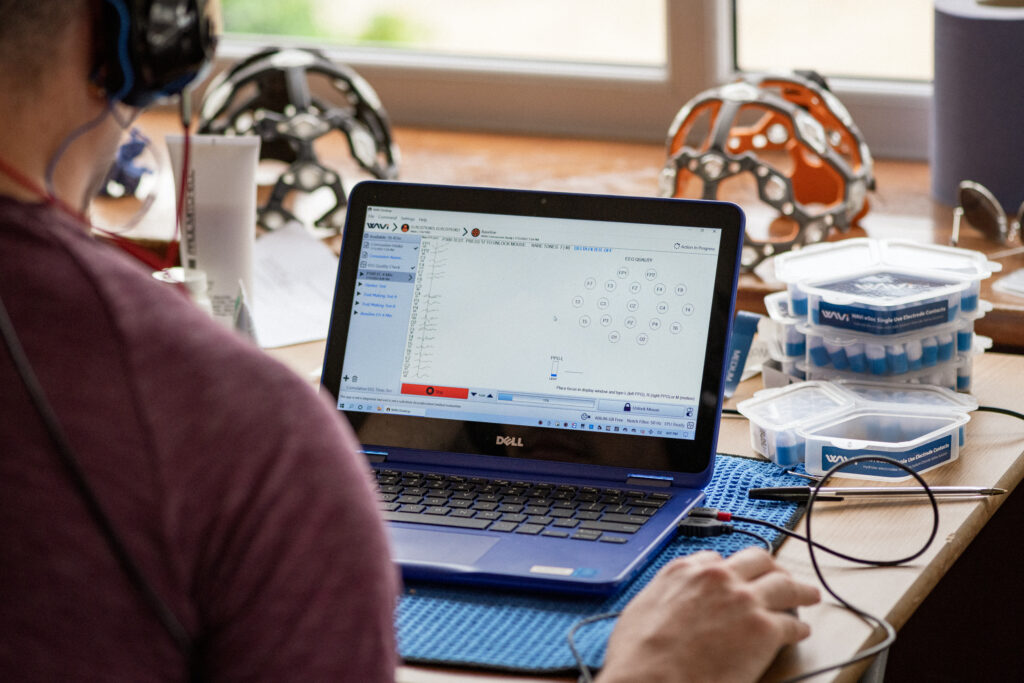
Event-related potentials are measurable electrical responses generated by the brain following a stimulus, such as a sound, image, or task instruction. These responses are recorded through EEG electrodes placed on the scalp.
Unlike standard EEG recordings that capture ongoing electrical activity, ERP testing focuses on time-locked responses associated with stimulus processing. Clinicians and researchers may analyze characteristics such as:
- Response timing (latency)
- Signal amplitude
- Consistency across repeated trials
- Patterns associated with attentional processing
ERP measurements have been studied across multiple neurological and research applications because they provide direct recordings of electrical activity generated by the brain.

ERP Testing in Sports Medicine
Athletes operate in environments requiring rapid reaction timing, sensory processing, and decision-making under physical stress. As a result, sports medicine professionals continue exploring methods for obtaining objective physiological measurements that may complement traditional evaluation approaches.
ERP testing has been investigated in athletic settings because it may help clinicians and researchers:
- Establish individualized baseline measurements
- Compare longitudinal recordings over time
- Evaluate neurophysiological response patterns
- Add objective physiological information to broader assessment strategies
- Support longitudinal athlete monitoring programs
ERP testing is not intended to replace clinical judgment, neurological examination, or comprehensive medical evaluation. Instead, it may serve as one source of physiological data within a broader clinical framework.
Common ERP Components Studied in Athletics
Several ERP components are commonly discussed in sports-related research and clinical literature.
P300 (P3)
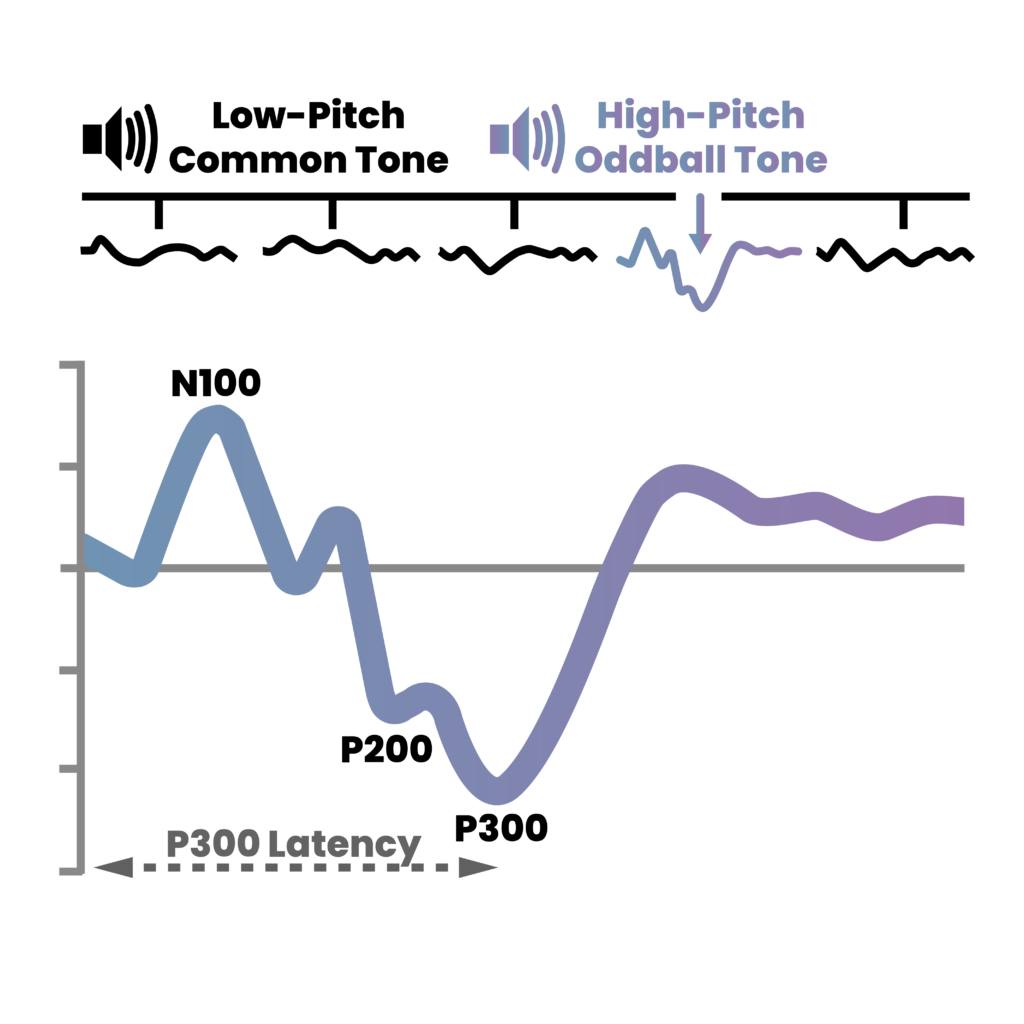
The P300 response is among the most widely studied ERP components and is associated with attentional and stimulus evaluation processes.
Researchers have examined whether changes in P300 timing or amplitude may correlate with altered neurophysiological response patterns following repetitive head impact exposure.
N100 and N200
These components are associated with early sensory and attentional processing. Researchers continue studying how these responses may vary under different physiological and environmental conditions.
Auditory and Visual ERP Paradigms
ERP testing may involve auditory tones, visual cues, or reaction-based tasks depending on the research or clinical objective.
Different paradigms allow clinicians and researchers to examine multiple aspects of stimulus-response timing and electrical activity patterns.
ERP Testing and Concussion Research
One area of ongoing interest involves the study of ERP measurements in concussion-related research and athlete monitoring programs.
Traditional concussion evaluations often include:
- Symptom reporting
- Balance assessment
- Cognitive screening
- Neurological examination
Because symptom presentation may vary between individuals, researchers continue exploring whether objective physiological measurements may provide additional context alongside standard clinical assessment methods.
Researchers have investigated ERP measurements as one source of objective physiological data that may complement broader clinical assessment protocols in athletic populations.
Baseline and Longitudinal Monitoring
Many athletic programs utilize baseline testing prior to competition seasons. ERP testing may be incorporated into these programs to establish individualized reference measurements for longitudinal comparison.
Longitudinal monitoring approaches may help clinicians and researchers observe:
- Changes across a competitive season
- Variability between athletes
- Trends in repeated measurements
- Physiological response patterns over time
Because neurophysiological responses vary between individuals, personalized baseline comparisons may provide useful context during ongoing monitoring.
Research in Athletic Populations
EEG and ERP measurements have been explored in multiple athletic settings, including studies involving collegiate athletes exposed to repetitive head impacts.
In one study involving Division I football athletes, researchers evaluated longitudinal EEG and ERP measurements across a competitive season. Findings from studies like these continue contributing to the broader understanding of neurophysiological monitoring in sports medicine.

Advantages of ERP Testing

Objective Metrics
ERP testing records electrical responses generated by the brain, providing physiological data that may complement symptom-based assessments.

Non-INvasive
ERP testing is non-invasive and typically performed using scalp electrodes in a controlled testing environment.

Repeatable Results
ERP assessments may be repeated over time, supporting serial monitoring and longitudinal evaluation strategies.

Integration into Clinical Workflows
ERP data may be reviewed alongside neurological examination findings, symptom assessments, balance evaluations, and other clinical information.
Important Considerations
ERP testing should always be interpreted by qualified healthcare professionals within the context of a comprehensive clinical evaluation.
Several factors may influence ERP measurements, including:
- Fatigue
- Sleep quality
- Medications
- Environmental distractions
- Individual physiological variability
ERP testing is not a stand-alone diagnostic tool, and ongoing research continues refining how neurophysiological data may be interpreted within athletic populations.

The Future of Neurophysiological Assessment in Athletics
Sports medicine continues moving toward more individualized and data-informed approaches to athlete care. As research advances, ERP testing may become an increasingly utilized source of neurophysiological data within sports medicine and research workflows.
Advances in acquisition systems, streamlined protocols, and longitudinal data collection methods are continuing to expand interest in physiological monitoring technologies across athletic environments.
For clinicians and researchers, the goal is not simply collecting more data. It is obtaining meaningful physiological information that may support informed evaluation and athlete care decisions. A surprisingly noble objective from a species that also invented energy drinks with enough caffeine to alarm cardiologists.
Regulatory Information
The WAVi Scan EEG System is FDA-cleared for the acquisition, display, and storage of EEG and ERP data to aid in diagnosis by qualified healthcare professionals. WAVi does not independently diagnose concussion or determine return-to-play status.
Related Reading
For healthcare professionals only. WAVi is intended for use by qualified healthcare providers as an aid in diagnosis.