
Case Studies

Real-world clinical applications of WAVi EEG & ERP assessment

Featured Research

Assessing Gluten-Related Brain Fog with EEG & ERP Measurements
P300 latency (response timing) measured across age groups, showing changes from early adulthood through later life. The trend illustrates gradual differences in EEG-derived response timing over time, based on reference population data.

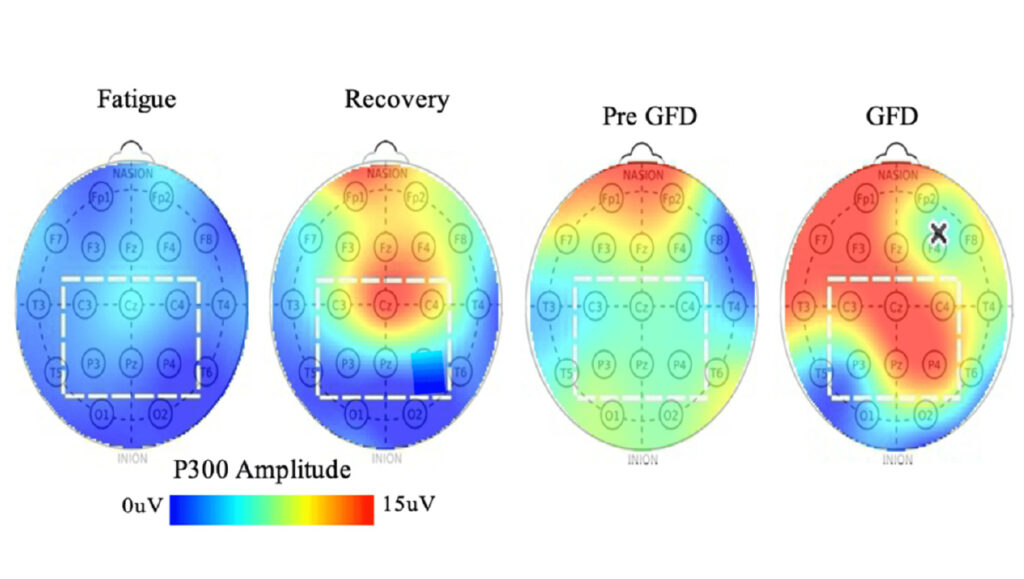
This case report explored the use of EEG and event-related potential (ERP) measurements in evaluating a patient reporting gluten-associated “brain fog” without classic gastrointestinal symptoms of celiac disease. Researchers observed reduced P300 amplitudes during gluten exposure that improved following a gluten-free diet, supporting further investigation into objective electrophysiological measurements for assessing subtle cognitive-related complaints.

Key Findings

• EEG and ERP measurements were used to assess subjective cognitive complaints

• Reduced P300 amplitudes were observed during reported “brain fog” periods

• Follow-up testing after a gluten-free diet showed increased P300 amplitude

• Objective EEG measurements may support evaluation of subtle cognitive-related symptoms

EEG & ERP Tracking During Ketamine Treatment for PTSD and Depression
P300 latency (response timing) measured across age groups, showing changes from early adulthood through later life. The trend illustrates gradual differences in EEG-derived response timing over time, based on reference population data.

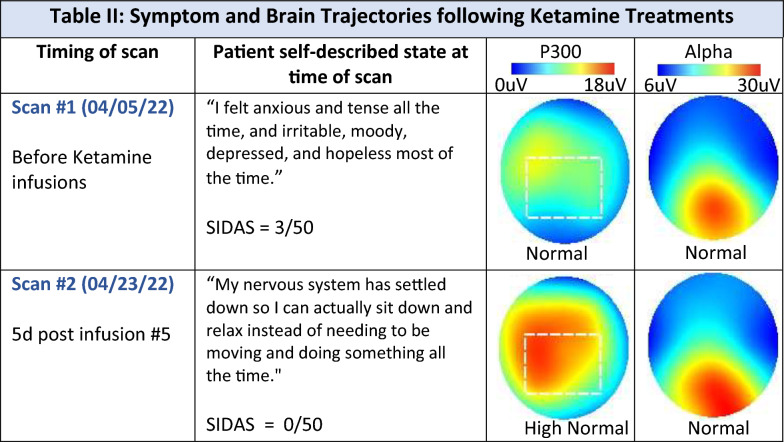
This case study explored the use of EEG and event-related potential (ERP) measurements to track neurophysiological changes during ketamine treatment in patients with treatment-resistant PTSD, major depressive disorder (MDD), and suicidal ideation. Researchers monitored EEG-derived biomarkers including alpha frequency patterns and P300 amplitude over the course of treatment, observing measurable electrophysiological changes alongside reported symptom improvement.

Key Findings

• EEG and ERP measurements were used longitudinally during ketamine treatment

• Researchers monitored P300 amplitude and alpha frequency distribution changes over time

• Electrophysiological trends were observed alongside reported symptom improvement

• EEG-based physiological changes sometimes appeared prior to functional or subjective improvement

EEG & ERP Monitoring in Post-Viral Fatigue Recovery
P300 latency (response timing) measured across age groups, showing changes from early adulthood through later life. The trend illustrates gradual differences in EEG-derived response timing over time, based on reference population data.

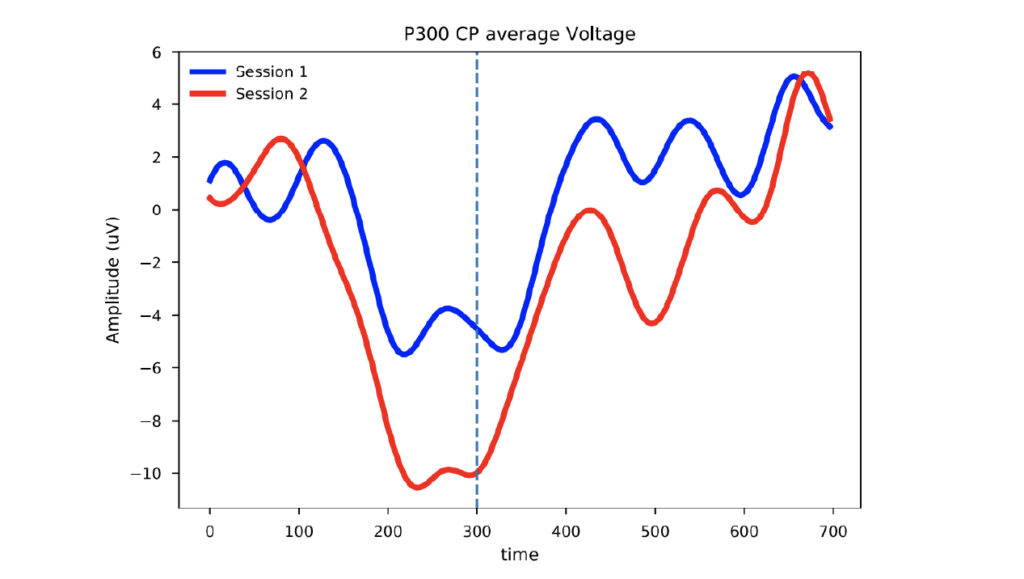
This case study explored the use of EEG and event-related potential (ERP) measurements to monitor neurophysiological changes in a patient experiencing post-viral fatigue syndrome. Researchers evaluated P300 amplitude, latency, and EEG frequency patterns over the course of treatment, observing measurable electrophysiological changes alongside reported improvements in memory, energy, and overall wellness.

Key Findings

• EEG and ERP measurements were used longitudinally during treatment monitoring

• Researchers observed increased P300 magnitude during follow-up testing

• Consecutive EEG scans demonstrated measurable physiological changes over time

• Findings supported further investigation into objective EEG measurements in post-viral fatigue assessment and rehabilitation tracking