

Posters & Abstracts
Browse conference posters and scientific abstracts featuring WAVi EEG and ERP acquisition across research and clinical environments. These presentations highlight study methodology, implementation approaches, and observed electrophysiological findings.
Featured Research
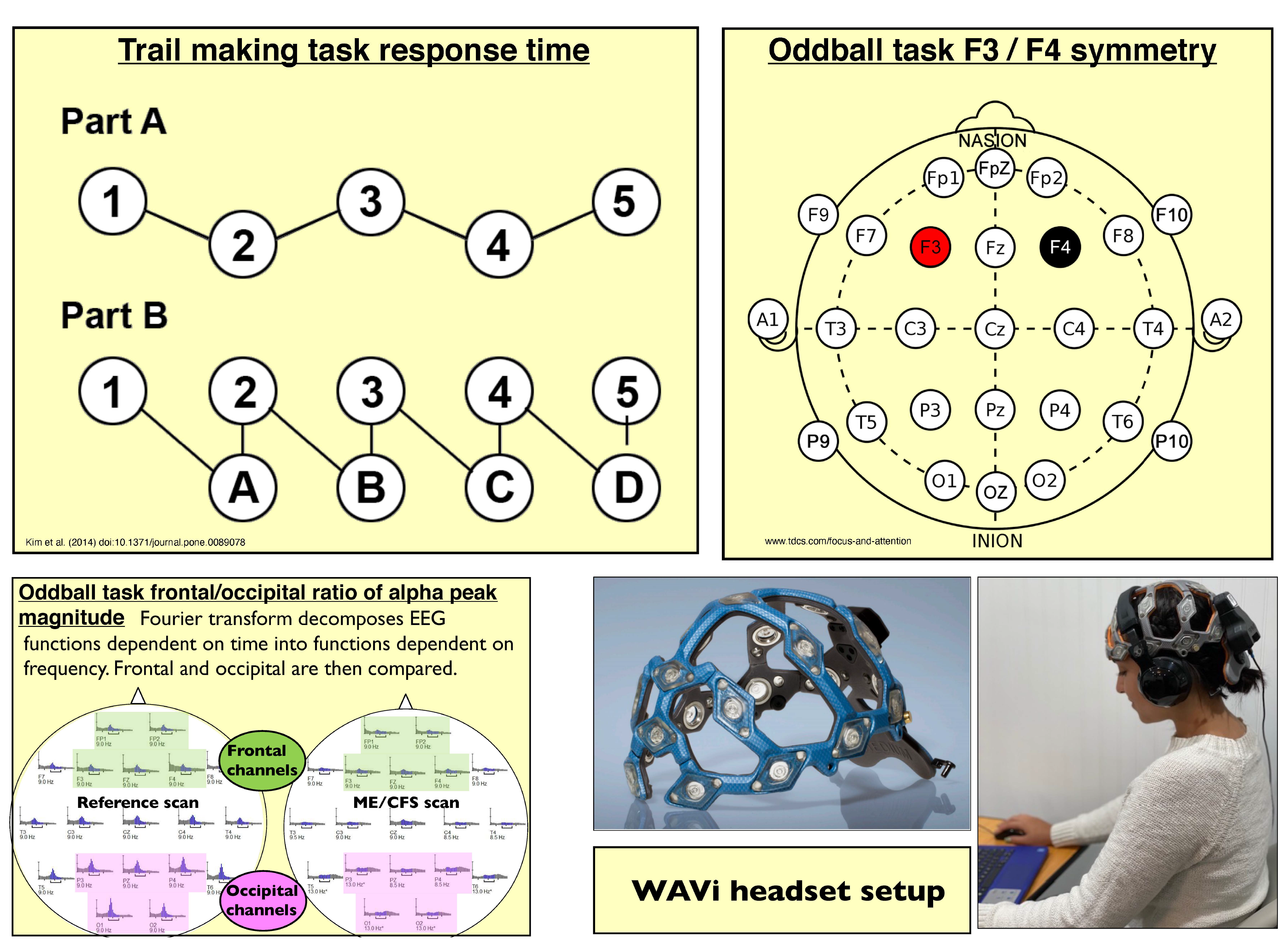
EEG Biomarkers in ME/CFS Detection
More Posters and Abstracts
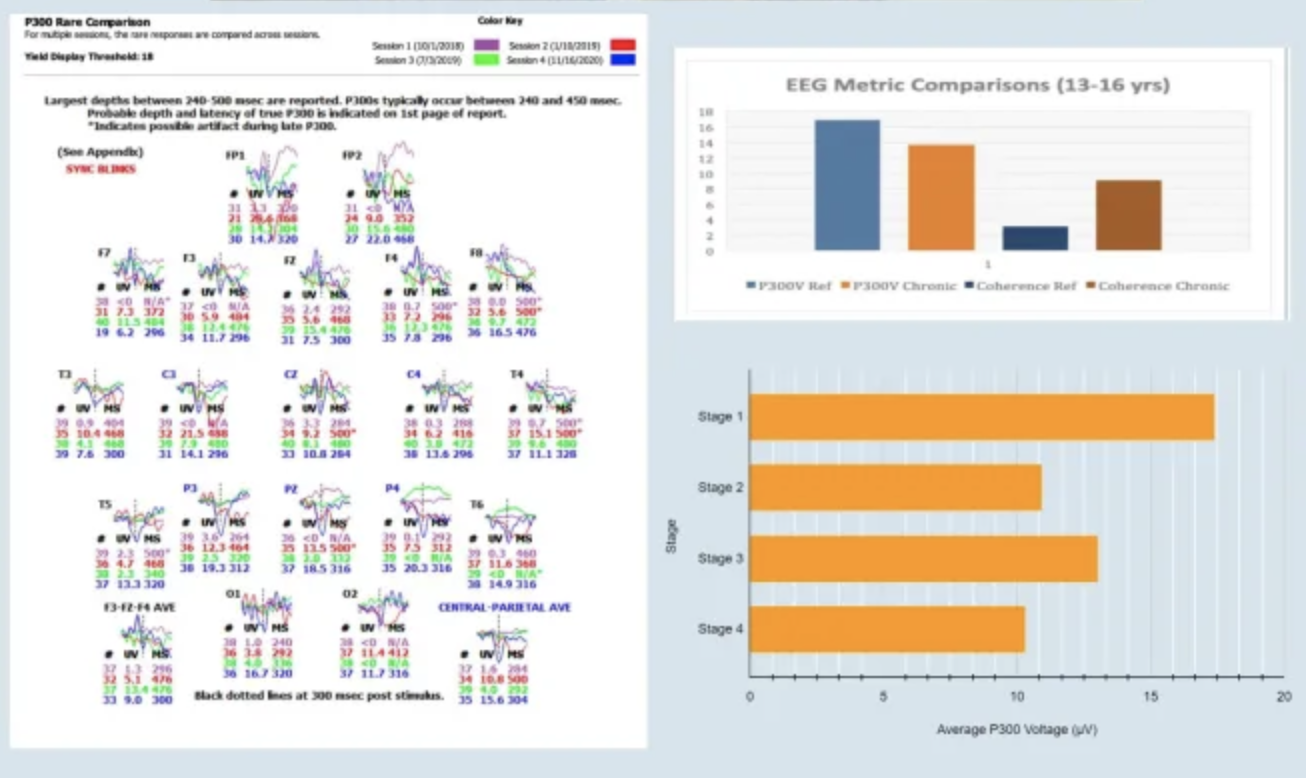
QEEG Evoked Potential Patterns in Pediatric Post-Concussion Symptoms
Key Findings
• Study evaluated qEEG and P300 measurements in pediatric PPCS cases
• Researchers observed declining P300 voltage trends across progressive PPCS stages
• Reduced P300 voltage appeared more common in symptoms lasting longer than three months
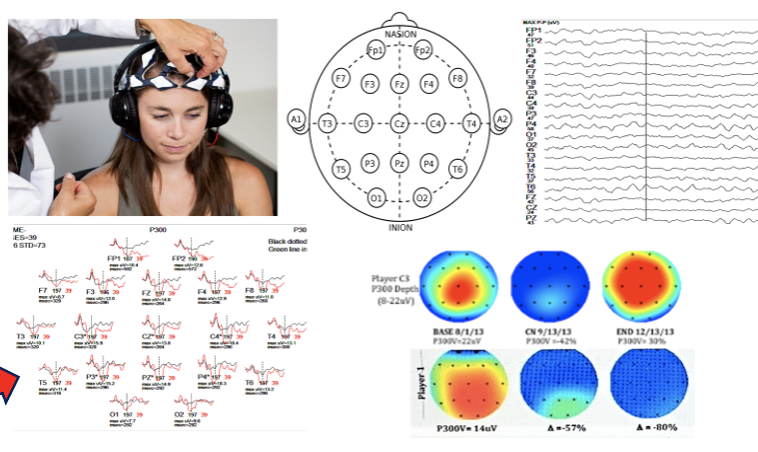
EEG Cortical P300 Testing in Rehabilitation & Concussion Monitoring
Key Findings
• P300 amplitude changes were evaluated in concussion and rehabilitation settings
• Baseline athlete testing included NCAA football, high school football, and women’s soccer participants
• Researchers observed measurable differences between baseline and post-injury EEG patterns
Clinical EEG & ERP Tracking for TBI Neuromodulation Interventions
Key Findings
• Advanced EEG analysis techniques demonstrated separation between control and TBI-related EEG patterns
• Researchers observed measurable EEG changes following concussion and during rehabilitation progression
• P300 amplitude and cortical delay metrics showed consistent test-retest reliability
• EEG-based physiological changes frequently appeared prior to observed functional improvement
EEG & Advanced Computer Analysis for Neurorehabilitation Tracking
This conference abstract examined how EEG, P300 testing, and advanced computer-based clustering analysis may support objective tracking of neurophysiological changes during rehabilitation and neuromodulation interventions. Researchers evaluated EEG-derived biomarkers across healthy controls and individuals with traumatic brain injury histories, exploring how physiological EEG patterns changed over time in response to rehabilitation efforts.
Key Findings
• EEG and ERP measurements were used to monitor neurophysiological changes over time
• Advanced clustering algorithms demonstrated separation between control and TBI-associated EEG patterns
• Researchers observed increases in P300 amplitude during rehabilitation progression
• EEG-based physiological trends often preceded measurable functional improvement